Every recording, on a timeline
Search by title, singer, or genre, and use the year range above to narrow the window. Click any dot to play it.
Nothing matches your filters.
Recordings per year
How much they recorded, year by year, split by genre, or by vocal versus instrumental.
Singers & instrumentals
Each row is a singer; every block a year they recorded. Darker blocks = more recordings that year. Click a block for that year, or a singer's name for everything they sang.
From the leader's own pen
Tangos the orchestra recorded that its leader also composed.
Singers & musicians
Everyone who recorded or played with the orchestra. Each card links to their page, so you can follow a singer or player to the other orchestras they featured in.
Eras and lineups
Who was in the band, and when. Each era joins to the recordings tagged to it, so lineups the corpus can't name are added over time.
Era and lineup research by Todo Tango. Endless gratitude to them for documenting who played in each orchestra, and for sharing it so generously. Go explore their wonderful work.
Led throughout by Juan D'Arienzo on director. Each era below is a chapter of the orchestra's lineup. The ones still marked as not documented are waiting to be filled in.
- 1928–1930
The Electra beginnings
40 recordings3 bandoneón2 violín1 piano1 bassD'Arienzo's first recordings, made for Alfredo Améndola's Electra label. He billed the group as "Juan D'Arienzo y Los Siete Ases del Tango" at the Cine Hindú. A revolving piano chair even sat, for a single month at the Chantecler, a young Carlos Di Sarli.
- Ciriaco Ortiz bandoneón
- Nicolás Primiani bandoneón
- Florentino Ottaviano bandoneón
- Alfredo Mazzeo violin
- Luis Cuervo violin
- Vicente Gorrese piano
- Luis Visca piano The D'Arienzo-Visca team.
- Nicolás Vaccaro piano
- Juan Carlos Howard piano
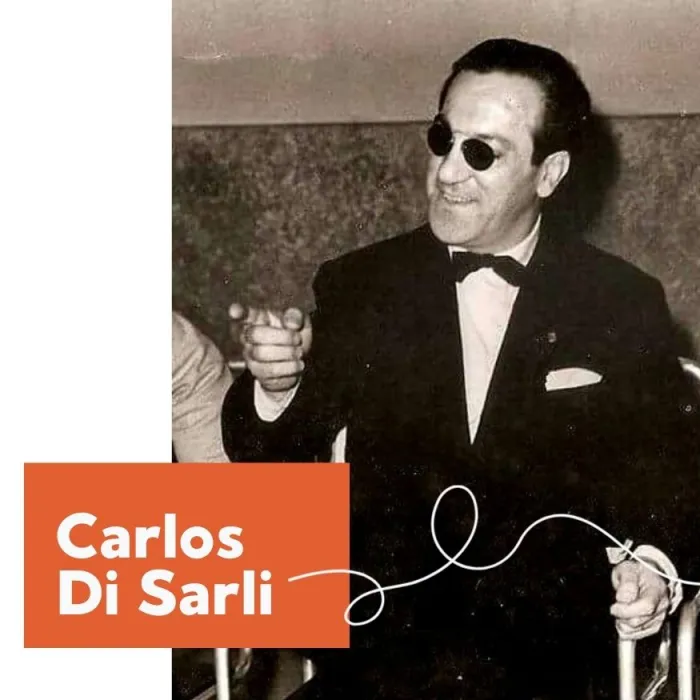
- Carlos Di Sarli piano Stood in for Visca for a month at the Chantecler.
- José Puglisi double bass Cayetano Puglisi's brother.
- 1928 Recording began for the Electra label; 44 tracks in this period.
- 1935
Lidio Fasoli on piano
10 recordings5 bandoneón4 violín1 piano1 bassD'Arienzo re-formed as leader and began recording for Victor, with Lidio Fasoli at the piano. Alberto Echagüe, the voice most identified with the orchestra, was already among the singers.
- Lidio Fasoli piano
- Domingo Moro bandoneón
- Juan José Visciglio bandoneón
- Faustino Taboada bandoneón
- Haroldo Ferrero bandoneón
- José Della Rocca bandoneón
- Alfredo Mazzeo violin
- Domingo Mancuso violin
- Francisco Mancini violin
- León Zibaico violin
- Rodolfo Duclós double bass
- 1935 Appearances on Radio El Mundo and the start of the Victor recordings.
- 1935–1938
Rodolfo Biagi, the classic style ignites
64 recordings5 bandoneón4 violín1 piano1 bassRodolfo Biagi's piano, joining in December 1935, lit the fuse of the driving, staccato style that became the D'Arienzo trademark. "Manos Brujas" stayed until June 1938, and Alberto Echagüe sang.
- Rodolfo Biagi piano "Manos Brujas"; the pulse of the classic style.
- Domingo Moro bandoneón
- Juan José Visciglio bandoneón
- Faustino Taboada bandoneón
- Haroldo Ferrero bandoneón
- José Della Rocca bandoneón
- Alfredo Mazzeo violin
- Domingo Mancuso violin
- Francisco Mancini violin
- León Zibaico violin
- Rodolfo Duclós double bass
- 1935-12-31 Orillas del Plata Biagi's first recording; the classic D'Arienzo style begins.
- 1938–1940
Juan Polito on piano
40 recordings4 bandoneón4 violín1 piano1 bassBiagi left in June 1938 and Juan Polito took the piano, his first recording "El internado". By the end of 1939 nearly the whole orchestra had turned over.
- Juan Polito piano
- Domingo Moro bandoneón
- Juan José Visciglio bandoneón
- Faustino Taboada bandoneón
- Haroldo Ferrero bandoneón
- Alfredo Mazzeo violin
- Domingo Mancuso violin
- Francisco Mancini violin
- León Zibaico violin
- Rodolfo Duclós double bass
- 1938-07-08 El internado Polito's first recording, replacing Biagi.
- 1940–1945
Salamanca, Varela leads the bandoneóns
129 recordings4 bandoneón4 violín1 piano1 bassFulvio Salamanca took the piano and Héctor Varela the first bandoneón, with Cayetano Puglisi anchoring the violins, a lineup that carried the orchestra through the war years. Héctor Mauré was among the singers.
- Fulvio Salamanca piano
- Héctor Varela bandoneón
- Alberto San Miguel bandoneón
- Jorge Ceriotti bandoneón
- Ángel Ramos bandoneón
- José Antonio Di Pilato bandoneón
- Cayetano Puglisi violin
- Alfredo Mazzeo violin
- Olindo Sinibaldi double bass
- 1940-04-12 Entre dos fuegos Salamanca's first recording with the orchestra.
- 1945–1950
Salamanca, the bandoneóns grow
105 recordings6 bandoneón4 violín1 piano1 bassThe bandoneón section widened as the orchestra peaked in popularity. Carlos Lazzari arrived, and singers Roberto Lemos, Alberto Echagüe and Armando Laborde passed through.
- Fulvio Salamanca piano
- Héctor Varela bandoneón Left in 1950 to form his own orchestra.
- Enrique Alessio bandoneón
- Alberto San Miguel bandoneón
- Carlos Lazzari bandoneón
- Felipe Ricciardi bandoneón
- Cayetano Puglisi violin
- Blas Pensato violin
- Jaime Ferrer violin
- Clemente Arnaiz violin
- Victorio Virgillito double bass
- 1950–1953
Lazzari takes the bandoneón lead
56 recordings4 bandoneón4 violín1 piano1 bassWith Varela gone to lead his own orchestra, Carlos Lazzari, who would also become the orchestra's arranger, moved to first bandoneón over Salamanca's piano. Alberto Echagüe and Mario Bustos sang.
- Fulvio Salamanca piano
- Carlos Lazzari bandoneón Also the orchestra's arranger.
- Enrique Alessio bandoneón
- Alberto San Miguel bandoneón
- Felipe Ricciardi bandoneón
- Cayetano Puglisi violin
- Blas Pensato violin
- Jaime Ferrer violin
- Clemente Arnaiz violin
- Victorio Virgillito double bass
- 1953–1957
Salamanca's final years
79 recordings4 bandoneón4 violín1 piano1 bassSalamanca's last stretch at the piano before he split, in March 1957, to form his own orchestra. Carlos Lazzari led the bandoneóns; Mario Bustos and Jorge Valdez sang.
- Fulvio Salamanca piano Left in 1957 to form his own orchestra.
- Carlos Lazzari bandoneón
- Enrique Alessio bandoneón
- Alberto San Miguel bandoneón
- Felipe Ricciardi bandoneón
- Cayetano Puglisi violin
- Blas Pensato violin
- Clemente Arnaiz violin
- Victorio Virgillito double bass
- 1957-03-13 Sin barco y sin amor Salamanca's last recording before leaving to lead his own orchestra.
- 1957–1964
Polito returns, Lazzari arranges
215 recordings4 bandoneón4 violín1 piano1 bassJuan Polito came back to the piano after Salamanca's departure, with Carlos Lazzari now shaping the arrangements. Jorge Valdez was the emblematic voice of this hugely productive stretch.
- Juan Polito piano
- Carlos Lazzari bandoneón Also the arranger.
- Felipe Ricciardi bandoneón
- Alberto San Miguel bandoneón
- Cayetano Puglisi violin
- Blas Pensato violin
- Clemente Arnaiz violin
- Victorio Virgillito double bass
- 1964–1975
The final years, a wider orchestra
227 recordings5 bandoneón9 violín1 piano1 bassThe last stage, with a broadened string section and Juan Polito still at the piano. D'Arienzo worked to the end; after his death his style carried on through tribute orchestras like Los Solistas and Los Reyes del Compás.
- Juan Polito piano
- Carlos Lazzari bandoneón
- Ernesto Franco bandoneón
- Luis Maggiolo bandoneón
- Felipe Ricciardi bandoneón
- Carlos Niesi bandoneón
- Bernardo Weber violin
- Mauricio Mise violin
- Milo Dojman violin
- Domingo Mancuso violin
- Blas Pensato violin
- Aquiles Roggero violin
- Osvaldo Rodríguez violin
- Fernando Suárez Paz violin
- Eduardo Fernández violin
- Enrique Guerra double bass
- 1972 D'Arienzo sanctioned Los Solistas, a spinoff under the "D'Arienzo" name.
- 1976 Juan D'Arienzo died; his style lived on in tribute orchestras.
- 1928–1975
Unassigned
47 recordingsThese recordings aren't sorted into an era yet.